Wednesday, 30 March 2016

Technology in the Classroom - The Future of Teaching is Now

Image found here
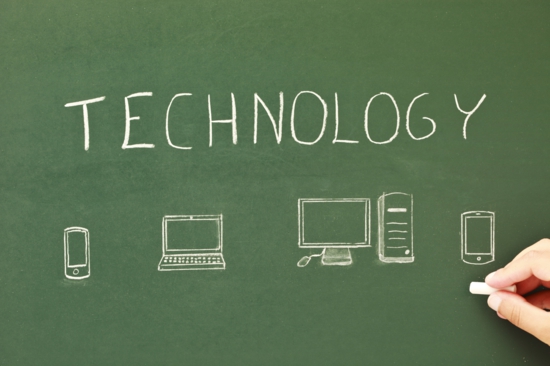
As our course begins to end I find myself beginning to reflect on the course as a whole, and on what I believe that the main takeaways have been. One of the most predominate 21st century literacy that I believe will really effect my students in the future is technological literacy. Technology is an ever growing phenomenon and it is inevitable that it will play a huge role in my future student’s lives. Therefore I believe that it will be crucial to actively and effectively integrate various technological resources and tools into my classrooms. What I find most interesting about this is notion is how much the concept of utilizing technology in the classroom has changed. I remember that when I was in school “using technology” involved going to the computer lab once a week to play on computer applications such as Kid Pix, which is a similar, less advanced version of MS Paint that is available on most PCs today. While at the time this was a new and exciting form of expressing ideas, it is nothing in comparison to the vast amounts of resource and tools available to students today. In classrooms today, technology cannot only be used for educational games, but also for teacher resources, social media, interactive tools for the classroom, as well as individualized support for the students that need it. It is clear that technology is quickly becoming a skill that teachers in the 21st century need to be comfortable with in order to be successful in their careers. This blog post will focus on interesting new technologies and tools that I have encountered and discovered that can be used in your future classroom.


Teacher Resources

Image found here
One of the great things about the technological advancement of our society is vast amounts of online and digital resources that have become available for educators and future teachers like myself. Going digital in terms of planning and organization gives the opportunity for teachers to have access to more and more information and tools than ever before. Our class was lucky enough to have a guest speaker present on an excellent source for current and future teachers to use to organize all of their links of online resources and ideas in a digital format that can be shared and accessed by educators across the province. The Cube is a great resource for teachers to have because it creates one central location for us to keep these technological tools and ideas. In my four years of university I have been exposed to so many great and educational ideas that I would love to use in my future classroom. However, I will admit that it has been a struggle to keep them all in one place where I know that I can find them later. This tool would eliminate this worry as even students who are a part of a Faculty of Education (like myself) have access to this. With the rise of social media and technology I find that I am constantly coming across information, ideas, activities, and new and interesting ways of teaching students in the 21st century. Social media websites like facebook, pinterest, and even twitter are constantly spreading concepts that I find interesting and that I would like to save. We have learned throughout this course that creating our digital foot print will ultimately benefit us when we are looking for teaching jobs and for when we get a classroom of our own. Having a central location to save and share ideas (such as the cube) will help teachers like myself stay organized and current with regards to their teaching practices and the content that they teach.


Classroom Technology

Image found here
Throughout my experiences volunteering and conducting placements in primary and junior classrooms, I have had the awesome opportunity to see new technology in action. When I was in school smart board technology was only just created, and we had one board for our entire high school of 1000+ students, that would be wheeled around to the classrooms for the teachers that booked it. It would then have to be calibrated and if anyone bumped into it or if it shifted the slightest bit, we would have to stop what we were doing to recalibrate. This was problematic because most of the teachers did not have the training and/or the patience to use it properly. Our first smartboard actually got ruined because I teacher used a permanent marker on it, rather than the specialized pens that it comes with. That all being said, it is clear that steps are being taken to ensure that new technologies are used correctly in classrooms. I know that now there are professional development classes for teachers to take that teach them about tools such as smartboards and Ipads and how they can effectively integrate into their classroom learning. In most of the classrooms that I have been placed in there has been a permanent smart board located in the classroom. As this is a permanent technological tool, much of the troubleshooting issues are not experienced and students’ learning is rarely hindered.
In preparation for my final assignment I have been following an account on twitter that shares resources and information regarding teaching students with special needs and individualized education plans. A common technological tool that is brought up is the iPad. iPads are another tool that I have commonly seen implemented into the classrooms that I have volunteered in, and I believe that they can be a great resource for children who need individualized learning. There is a breadth of educational applications available on this device that teachers can use to ensure that all of their students have equal access to education that is best suited to their individualized needs. As I was exploring for this topic I came across this blog regarding iPads and all of the different ways that they can be used to an educators advantage. Give it a read if you are interested learning more here.

This blog post shared some great educational tools for all future educators out there; however this is just the tip of the iceberg. I encourage all of my colleagues to explore and collaborate technological tools and online resources so that we can help bring our future students into our technological society successfully.  Happy teaching!
Image found here.


Tuesday, 8 March 2016

Environmental Literacy - Teaching our Students to go Green

Over the past couple of weeks I have had the opportunity to both teach and learn from my peers with regards to the 21st century literacies that are present in today’s classrooms. The jigsaw method is one of my favourite ways of collaborating with my fellow classmates, as it allows us to practice teaching to one another while learning new concepts. One of the literacies that I found to be most interesting was Environmental Literacy. This concept intrigued me because it was something that was rarely focused on when I attended elementary school. Environmental literacy refers to educating students about the physical world that they live in and how they're actions can affect the Earth positively or negatively. I feel that this is such an important concept to be teaching young minds because they are ultimately the people who will have to live on the planet that we have left for them. Therefore, it is imperative that we teach our students how to properly care for the Earth, especially amid the current crisis of global warming. In addition to topics such as recycling, water consumption, littering, and buying local food, we need to simply teach our students to appreciate and respect the earth.


During our classes we have had the opportunity to explore various programs relating to the literacies. One of the programs regarding environmental literacies incorporated activities in which teachers conducted some lessons and classes outside. They may be teaching students about the alphabet or simple math equations the same as they would inside the classroom, but just outside. I liked this idea because as a young scholar I can’t recall many instances where I was outside during the school day other than at recess. I believe that this would be a good idea to use in my future classes not only for its environmental awareness aspect but also for allowing my students to get some fresh air by being outside. I feel that students would not only be excited to engage in outdoor classrooms but also be able to focus better. This type of instruction would clearly benefit students who cannot focus when they are sitting inside all day.After thinking about this topic I started to think about some ideas that I would try out in my classroom. In terms of teaching young students math I thought that it would be fun to get students to collect natural elements of the outdoor classroom to use as manipulatives rather than the typical blocks or counters typically used in classrooms. They could use rocks, sticks or fallen leaves to practice addition and subtraction. As I previously stated I think that this would hold the student’s attention much better as opposed to practising these skills in the classroom.


An interesting resource that really sparked my interest was the Green Sparks Initiativewhich is an American site that provides educators and other individuals with ideas and links for teaching students about how to be environmentally aware. They provide ways in which teachers and other school officials can strive to have a “green” school. This includes some of the topics discussed above, but also about healthy eating and about global environmental issues. This is a great example of how the 21st century literacies can be integrated together to teach students how to be critical thinkers. This single resource promotes both environmental literacy, global literacy, financial literacy, and healthy living.

As a future educator, I will strive to include topics and concepts mentioned throughout this blog into my classroom. In doing this I can better prepare my students to be active citizens passionate about caring for the planet that they call home. 

Wednesday, 13 January 2016

21st Century Literacies

A new semester is upon us and I have to say that I am looking forward to seeing what it has in store. The next four months will be my last semester of my undergrad, and although I am sad to see it end, I am excited to start teacher’s college and hopefully begin my career. Until then, I will continue to gather as much information as I can on this profession as I have done for the past four years. The purpose of this blog has been to help me understand and discover new techniques and activities that I can implement into my future classroom. This semester this blog will be used for a new course that I am starting (EDUC 4P27), which looks at 21st Century Literacies in today’s classrooms. 

The first lecture for this class was inspiring and I am looking forward to learning more regarding this topic. Discussing the importance of teaching 21st century literacies is something that I have not had much experience with and so I am excited to learn how to teach these notions to my future students. As we learned in class this past week 21st century literacies are all important and new ways of helping our students discover new information and to help them decipher daily occurrences in the world around them. 

I find this topic fascinating because most literacies are fairly new. When I was in school technological literacy was only just starting to become important, but it is clear that our society now has adopted a very technological focus. Therefore teaching our students how to be careful on the internet and how to use it to their advantage to uncover and understand new information is crucial for their learning and development. I’m looking forward to learning how to teach my students how to do this. Another literacy that is fairly new, and interesting to me is mental health literacy. Mental health and mental health awareness is becoming more and more common in our society, and I am a strong believer in the concept of teaching our children/students about this topic at an early age. I believe that this too will help them in their healthy development and will help them to be good learners.

All in all, this class and semester look pretty good in terms of new information relevant to my career. I am thoroughly looking forward to uncovering information on 21st century literacies in EDUC 4P27 this semester.

Tuesday, 10 November 2015

Assessment as Learning - Self-Assessment Through Journaling and Blogging


Image found here.
Assessment is one of the main topics of this course and so I thought that it would be beneficial to explore assessment as learning assessment for this blog. Assessment as learning is a type of assessment in which students are expected to self-assess and to monitor their own learning (Drake, Reid & Kolohon, 2014). Assessment as learning falls under the umbrella of assessment for learning, as this assessment promotes additional learning for the student. In assessment as learning scenarios students are expected to reflect and grade what they have learned and/or created in order to deepen their metacognitive skills (Drake et al., 2014). Metacognitive skills are extremely important for young minds because it means that they are able to think about their own thinking. This allows them to think more critically about what they are learning and about various situations that they may find themselves in.

Throughout my educational journey I have realized that I have been given many opportunities to self-assess. I think that in the long run this has benefited me because it has given me practice in evaluating my own work. Most of these opportunities occurred throughout elementary school and have decreased in frequency as I have moved through university. Even though I find that I don’t have the opportunity to grade/assess my own work often throughout university, I realize that I assess my work before it is actually graded by my teachers and professors. I believe that assessment as learning (self-assessment) is super important because it encourages thinking about what you are writing or presenting, and therefore enables you to edit better.

Image found here.
One of my favourite examples of self-assessment is through journaling. Journaling can be done in many formats and can be used in any grade. If a student (in kindergarten) has not yet mastered the ability to write they can draw in their journal, and once they can they can write in a journal all the way up to high school. Much like a personal diary, journals can be used to see how we are doing and where we need to go. Journals can be used for assessment because they allow a teacher to see where a student’s thoughts are, and they allow the student to reflect on and inquire further into topics that they are learning in class. Using this method in my future classroom, I can give my students the opportunity to understand through their writing how they are doing with regards to a particular subject or lesson.This site is a really helpful resource that may be worth tucking away in your future teacher toolkit. It describes different ways that teachers can use journaling for their students to self-assess, and it has all sorts of resources including rubrics.

Another interesting site that I found (Link) discussed ways in which students can assess their own work. I found this site interesting because it listed blogging as a form of self-assessment. Prior to this research I had not considered the act of writing these blogs to be a form of assessing myself. It makes sense now that this is the case because I realize that we are writing about and expanding our knowledge on topics covered in class, and therefore we can self-assess and see what we have understood and taken away from lecture and class material. Blogging is another great way for students at all grade levels to share what they have learned and to improve their metacognitive skills.

Assessment as learning, is a great way to incorporate additional learning and knowledge into self-assessment by students. Incorporating this into my classroom will be key for me to see how my students think they are doing. It will also enable me to assess their thinking skills. I hope that you have found this blog informative and enjoyable. Until next time, happy teaching!
Image found here

References
Chan C.(2009) Assessment: Reflective Journal, Assessment Resources@HKU, University              of Hong  Kong http://ar.cetl.hku.hk
Drake, S. M., Reid, J. L., & Kolohon, W. (2014). Interweaving Curriculum and Classroom

Assessment: Engaging the 21st Century Learner. Don Mills, ON: Oxford University Press.

Wednesday, 7 October 2015


Differentiated Learning - An Instructional Strategy for ALL Students

Image result for differentiated instruction comic
https://blogger.googleusercontent.com/img/b/R29vZ2xl/AVvXsEi0uzeWEtlIEJweqjm0zM01ls7dhOJ5AWkKDUaUstYyEh8oqxJ5RaZ8fWR01ZPRdmwiqpcU6z7znOiVAH6etpqCph__gvJjPPdIhHFsOxhjYfDDi79JtkUx4jQl4XPlVy2UchGpW-zE3_g/s1600/Equal_Testing_Comic.jpg

One of my goals as a future educator is to target all of my students fairly and effectively so that they will all have the same chance to achieve their goals. As seen in this common comic regarding the education system above, we can see that students have different needs and that having one specific way of teaching and assessing our students is unrealistic and sets some students up for failure.

Differentiated Learning (also known as different instruction) is defined as a way of instructing that strives to adapt teaching to target the varying needs, learning styles, and readiness of each student in a classroom (Drake, Reid & Kolohon, 2014). In simpler terms, differentiated learning ensures that all students, regardless of their learning ability/level, their interest or their way of learning, can take part in and understand the content that is being taught in the classroom.

As a future educator, and from being a student myself, I understand that everyone learns differently. There are visual learners (who learn by seeing information), there are auditory learners (who learn best when hearing information), and there are kinaesthetic learners (who learn by doing), to name a few. I have learned over the years that I am a visual learner, and that I learn by best when I can physically see information. Many students may be like this, but it is important to remember that not all students learn this one way. Teachers have to be aware and sensitive to the varying ways in which their students learn. Through differentiated instruction, a teacher must be aware of these differences and gear his/her curriculum and instructional methods to meet those varying needs.  

https://systramartha.files.wordpress.com/2013/05/1.png
According to Drake et al. (2014), there are four broad categories for educators to consider when they are designing lesson plans in a differentiated learning classroom. These four include cognitive, intellectual, group orientation, and environmental categories. They state that it is important to consider how each student thinks and learns and to use research-based instructional strategies, for example project based learning that I discussed in my previous blog. Teachers must remember that students have a preferred learning style, that students thrive in certain environments, and how a student works independently or with others (Drake et al., 2014). I believe that this is a solid way of remembering that your students are individuals who have individual needs. In a classroom of 25+ children, it is impossible to teach them all individually, and so we as educators need to incorporate multiple forms of conveying and teaching information into our lesson plans.

The following video is a quirky and informative piece that helps describe what differentiated instruction is in simple terms that we can all understand. I found this video to be quite engaging and therefore I wanted to share it with you. J

From this clip we learn that there are 3 important pieces of the puzzle to consider: content (what you are teaching), process (how you teach it), and product (what students do/make with the information). Teachers must remember that even though there is a curriculum to follow, we can always change it up in the way that we deliver the information to our students.

Studies have shown that by using differentiated instruction we can increase student success (Morgan, 2014). This article highlights the many benefits of incorporating this strategy in a classroom. For example, it discusses the role of technology in student’s lives and how we need to be aware that it has opened up many other ways of learning for our students. Technology and related programs have the ability to target student interest and special needs.

As I come across educational resources I try and save them so that I will be able to access them in the future. Here is a great site for lesson plans and other resources in regards to teaching through differentiated instruction.  I hope that you enjoyed this post and that you learned a thing or two about differentiated learning. Happy teaching!

~Morgan Parker~

http://48dnme43ze1jc1q2typq9495.wpengine.netdna-cdn.com/wp-content/uploads/2013/03/iStock_000021222841_Small.jpg

References

Drake, S. M., Reid, J. L., & Kolohon, W. (2014). Interweaving Curriculum and Classroom
Assessment: Engaging the 21st Century Learner. Don Mills, ON: Oxford University
Press.
Morgan, H. (2014). Maximizing Student Success with Differentiated Learning. Clearing House, 87(1), 34-
38.


Wednesday, 23 September 2015

Project Based Learning - Learning through Investigation and Discovery

As a student, I am quite familiar with projects - culminating projects, science projects, visual arts projects, you name it. My teachers used projects as a way to assess our understanding of taught material, and to give us an opportunity to apply the information and content that we had learned. Many of us may be familiar with this as projects have been used constantly throughout our educational journey and because they have been a staple in a teacher’s toolkit for many generations. However a new way of conducting and using projects to facilitate student’s learning is being introduced and gaining popularity.

http://digitallesson.com/wp-content/uploads/2012/12/StudentsWorkingOnProjectXSmall-300x199.jpg

Project Based Learning (PBL) refers to a learning and assessment method in which students are put into groups and their task is to investigate a topic or find out the answer to an open ended question (Drake, Reid & Kolohon, 2014). Through this method students are learning as they are completing the project rather than simply applying previously learnt material. Drake et al. (2015) explain that the benefits of using project based learning with your students includes them learning an array of 21st century skills that will assist them in all of their future endeavours. These include critical thinking skills, collaboration and communication skills, the ability to conduct research, and finally problem solving skills (Drake et al., 2014). The following video gives a good description and example of how project based learning can be used in a classroom.

As the video suggests, project based learning prepares students for the real world. It allows them to practice and perfect skills that will allow them to be better employees and citizens. One of the key skills needed in PBL is collaboration - the ability to work well with others to achieve a common goal. Being able to collaborate and communicate effectively is a necessary skill in most professions and so acquiring this skill at an early age is extremely beneficial.

Cziprok & Popescu (2015) discussed another aspect of project based learning that I find to be extremely important for young minds. They state that project based learning is student centred and it allows them to conduct an assignment on something that they take interest in within a set broad topic. This is good for both students and teachers because students are more likely to be engaged in their academic work if it is on something that they enjoy and something that they can take pride in. PBL follows the constructivist theory in that the teacher acts more as a facilitator rather than a lecturer (Cziprok et al., 2015). This allows the students to take charge of their learning as they research and conduct their project.

As I stated at the beginning of this post, I am very familiar with the typical project assignment and have had limited experience with project based learning. However, the one instance of PBL that I have taken part in was a positive one. In Grade 12 I took a business leadership course and my teacher was very focused on student driven learning, and she liked having us explore on our own. Our major assignment for the year was to plan and run a specific school event in groups of 14. My group had the daunting task of running a school walk, barbeque and outdoor fundraiser for a specific charity. 
School Poster for our Event - A Walk Worth Walking
This project took over 2 months to complete and involved acquiring sponsors, logistical planning, fundraising, and a whole bunch of communication with our group members. We were all given a specific role, and I was one of 2 project leaders. Although this was one of the hardest assignments I have ever taken part in (organizing and leading 13 of my peers was no easy task), I have to say that it was probably the most beneficial as it taught me so much more than a textbook could. PBL is all about learning while doing, and through this assignment I learned about logistical planning, school safety protocols, how to work with businesses and corporations, among many other things.

The use of technology played a huge role in my assignment, and with the rise of technology this is becoming more common in PBL classrooms. ChanLin (2008) discussed a PBL assignment in which students in Taiwan used various forms of technology to learn and present a science problem. In this classroom, students used computers with access to the internet to research, acquire, and share information regarding their project based learning assignment. Technology is a great tool in PBL, as students are able to access an infinite amount of resources. It is important to keep in mind that not all students have access to a computer, and so teachers should plan accordingly (Ex. book time in the computer lab, etc.). The full study on this project based learning assignment can be found here: à http://eds.a.ebscohost.com.proxy.library.brocku.ca/eds/pdfviewer/pdfviewer?sid=ce74449b-7436-4626-801c-5797b362e350%40sessionmgr4003&vid=0&hid=4113 

The possibilities are quite endless with project based learning, and I hope that as a future educator you have been able to take something away from this blog. For more information on project based learning, and for ideas for your classroom visit http://www.edutopia.org/project-based-learning. Thank you for reading and happy teaching!

~Morgan Parker~
https://grist.files.wordpress.com/2013/10/thumbs-up.jpg
                                                     

                                                       References
ChanLin, L. (2008). Technology integration applied to project-based learning in science.
Innovations for education & teaching international, 45(1), 55-65.
Cziprok, C.C. & Popescu, F. F. (2015). Project-based learning based upin the constructivist
method for high school physics lessons. Elearning & software for education, 1(3), 469-
476.
Drake, S. M., Reid, J. L., & Kolohon, W. (2014). Interweaving Curriculum and Classroom
Assessment: Engaging the 21st Century Learner. Don Mills, ON: Oxford University
Press.